- Non-surgical
- ~20 minutes
- Local anesthesia
- Low recurrence
Ingrown Toenail — what is it?
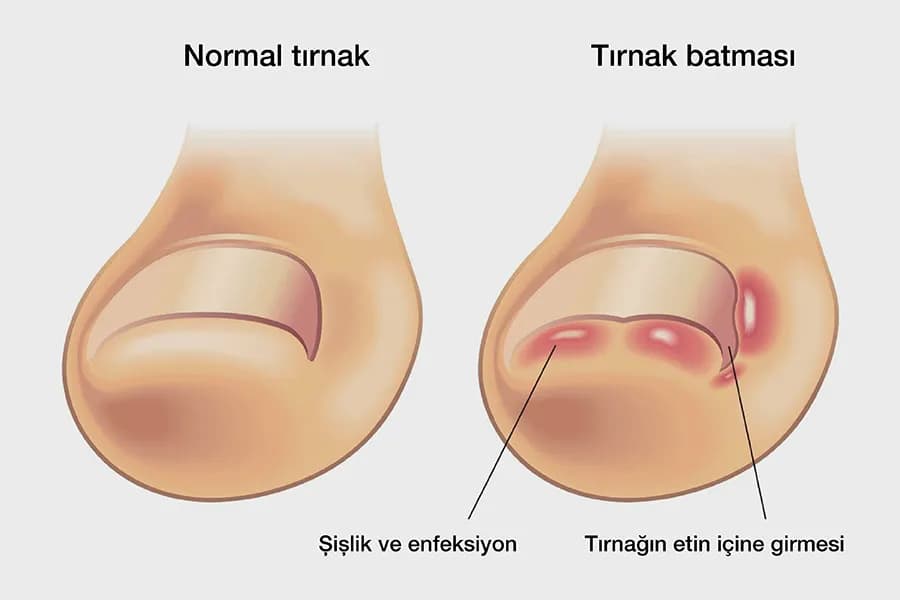
An ingrown toenail occurs when the edge of the nail — most often on the big toe — grows into the surrounding soft tissue, causing pain, redness, swelling and, over time, infection. Improper nail trimming, tight shoes, sweating, trauma and a genetic nail shape are the most common causes.
In the early stage, warm soaks, proper trimming and dressings can give relief; however, for recurrent or infected cases the lasting solution is to remove a narrow strip of the nail edge and chemically ablate the nail root (matrix) in that area with phenol (phenol matrixectomy). That edge of the nail then no longer regrows in a way that digs in.
The procedure takes about 20 minutes under local anesthesia, requires no hospital stay and allows a same-day return to daily life. Compared with classic surgery, phenol matrixectomy is less painful, heals faster and has a markedly lower recurrence rate.
How is it done?
- 1
Assessment
The severity, infection status and nail shape are evaluated and the suitable method is determined.
- 2
Phenol matrixectomy
Under local anesthesia the ingrown nail edge is removed and the nail root in that area is ablated with phenol.
- 3
Healing
Simple dressings for a few days; the area usually heals in 2–4 weeks.
Benefits
- Far more comfortable than classic nail removal
- Painless procedure under local anesthesia
- Completed in about 20 minutes
- Markedly low recurrence rate
- Same-day return to daily life
- Aesthetic nail appearance preserved
Who is it for?
- Those with recurrent ingrown toenails
- Those with infection, discharge or tissue overgrowth (granulation)
- Those with frequent ingrowth from tight shoes/improper trimming
- Those with foot-health risk such as diabetes (with proper assessment)
Aftercare
- Keeping the area dry and clean in the first days
- Following the recommended dressings and topical care
- Choosing roomy, comfortable shoes
- Cutting the nail straight across, not rounding the corners
Frequently asked questions
Is the procedure painful?
No pain is felt during the procedure thanks to local anesthesia; any mild soreness afterwards is short-lived.
Is the whole nail removed?
No, usually only the narrow ingrown edge strip is removed; the nail's appearance is largely preserved.
Does it recur?
Recurrence is low after phenol matrixectomy; with correct nail care, recurrence is largely prevented.
When can I return to work?
Most patients return to daily life the same or next day; comfortable shoes are advised in the first days.
I'm diabetic, can I have it done?
Foot wounds need more care in diabetes; with proper assessment and blood-sugar control it can be done safely in most patients.